Finding Words
I first discovered Found Poetry (now there’s an interesting dual layer) whilst exploring arts-based research methodologies using textiles. The concept was nestled in amongst Esther Fitzpatrick and Avril Bell’s recounting of engaging with ancestral stories through archival materials, poetic writing, and the making of an arpillera—a Chilean tapestry.
On the surface, it sounded very similar to a TikTok trend I was introduced to several months back referred to as “Blackout Poetry”; except with perhaps slightly more creative freedom. Indeed, further reading revealed that Blackout Poetry is one form of Found Poetry—redacting large sections of text from a page, leaving the poem to emerge from the words that remain. Found Poetry can also involve gathering words and phrases from an existing text and rearranging them, working with repetition, punctuation, spacing, and line breaks to create something new.
Having thoroughly enjoyed incorporating poetry into my Master’s thesis, I am keen to once again incorporate poetic writing into my Doctoral thesis too. What form that will take is yet to reveal itself—but during these early stages of my research, involving a LOT of reading of scholarly articles, Found Poetry felt like a good start.
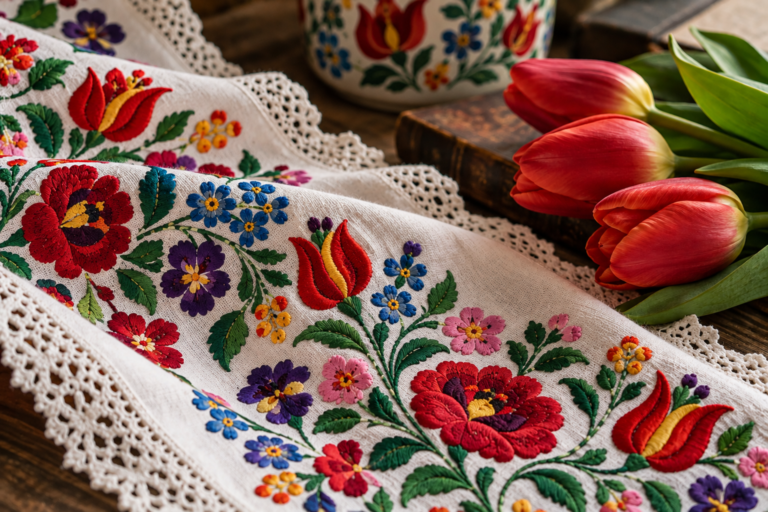
And what better article to begin with than one about Hungarian embroidery? I mean, Esther’s article that first introduced me to Found Poetry was actually about textile art—so in a way, this feels like coming full circle.
One thing that never ceases to amaze me is how I discover new understandings and language for expressing my research as I engage reflexively with the materials (no pun intended) that I’m working with.
And this exercise of identifying words and phrases that stood out for me and arranging them into a cohesive poem did just that.
The article was about embroidery. But as I gathered its words—words about travelling, historical continuity, belonging, and changing meanings—I realised that I was composing a poem about storytelling.
About the stories heard, inherited, remembered, told, and re-told. About what happens to them as they travel across generations and places. About what persists, and what takes on new meaning.
And somewhere in that process, I found words for what I am doing in Threads of Exile:
I am returning to the past, bringing reappearance into the present, and taking new meaning into the future.
Tomorrow, I will share what I found.