Lost in Translation
What language do you think in? A seemingly simple question from my supervisor sent me down an unexpected rabbit hole involving family stories, found poetry, and the peculiarities of translation.

What language do you think in? A seemingly simple question from my supervisor sent me down an unexpected rabbit hole involving family stories, found poetry, and the peculiarities of translation.
Research isn’t always about knowing what we’re looking for. Sometimes the most interesting discoveries happen when we surrender to the process and see where it takes us.
I have a habit of stumbling across things I didn’t know I was looking for. But what if those seemingly random coincidences aren’t quite so random after all? And what if recognising the connections between them is an art in itself?
What do a new car, a long hot shower, artificial intelligence, and a Hungarian grandmother have in common? More than I could possibly have imagined.
Who gets to tell their story, whose voices are heard, and what happens when those who have been marginalised move towards the centre?
I went looking for words in someone else’s writing. I hadn’t anticipated finding words for my own story.
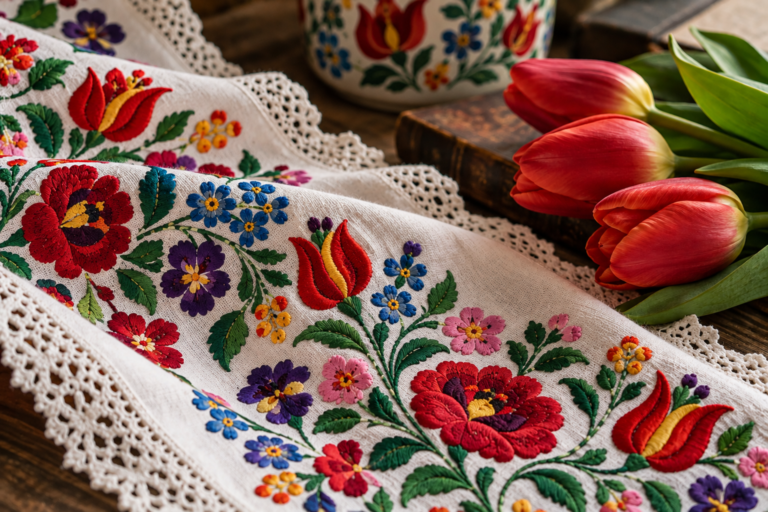
I thought I was simply deciding how to frame three pieces of Hungarian embroidery. I hadn’t anticipated what would emerge from the conversation.
I thought I was simply explaining my research to an ethics committee. Instead, I found myself understanding it in an entirely new way.
I love the unexpected tangents that emerge during counselling sessions—and the things I learn when conversations wander somewhere I never anticipated.
Perhaps the stories we inherit are not carried forward word for word, but in the feelings, images, and truths that remain long after the details have been forgotten.